
By Sung Hoon Kang
Out of the many wonderful things that God created for us during Creation week, perhaps “time” is one of the most overlooked, yet the most fascinating. Consider the following quote from Maimonides, the great Jewish scholar of the 12th century:
“Time is an accident consequent upon motion and is necessarily attached to it. Neither of them exists without the other. Motion does not exist except in time, and time cannot be conceived by the intellect except together with motion. And all that with regard to which no motion can be found, does not fall under time.”
The last sentence of Maimonides’ quote actually pertains to God Himself. As “motion” (as well as space) implies measurement and can only apply to physical objects, and as God is not limited to a physical body, then He is not confined by time or space. He operates beyond time, as we know it. Time was created by God, for us.
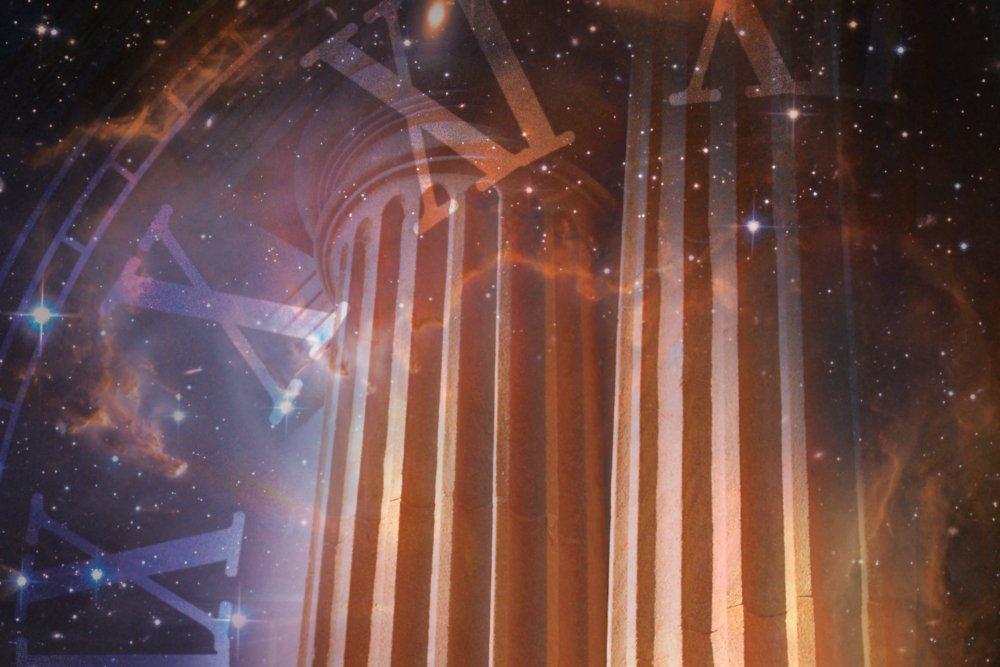
I would turn your attention now, and have you consider well, how God established a temple in time.
“And God blessed the seventh day, and sanctified it.” Gen. 2:3.
Out of the weekly cycle that He created, He blessed the seventh day, and sanctified it—set it apart for holy use. Here, God established His sacred space where His children can come to Him and obtain rich spiritual blessings. I do not want you to miss that. In His effort to commune with His children, He did not ordain one geographical location where everyone must come and meet Him. Instead, He chose to establish a temple in time—the seventh day of the week. Because the Sabbath comes wherever you are, you cannot miss it.
Sabbath does not force itself upon you, but it is completely available to everyone on the earth. When the time arrives, you simply accept it and let it cover you. It is there, ready and waiting. God created spiritual space that is not tainted by sin, which no armies can destroy and no feet can trample upon—a temple in time.
Sabbath offers us an opportunity to explore the invisible world all around us. In that invisible world we can live as we live in this one. That other world can become real to us. It can surround us at every point. We can live as seeing Him who is invisible. The invisible world is just as real as the world we can touch, feel and see. Though we cannot reach out and touch it, we can grasp it by living faith. Each time we talk to God, each time we open the Bible, each time we contemplate upon Him, we enter into the invisible world. Therefore, Paul counsels us to “pray without ceasing.” 1 Thess. 5:17. The more we spend time in the invisible world, the more that world will become real to us.
To Enoch, the invisible world became so real that, finally, he no longer belonged to this present world. He was transferred to the invisible world that is more real than this present world. Thus, for all Christians who are longing to enter into the invisible world, we must have a quality space of time with God. We need a Sabbath. “The Sabbath was made for man.” Mark 2:27. We need time to remove ourselves from the hectic, busy life and to concentrate on the mysteries of godliness. And God has ordained the seventh day where we can lay aside our earthly cares and worries and completely immerse in spiritual activities. Sabbath is a foretaste of Heaven in the midst of this sinful world.
Now, let’s go back to our temple in time. God has given us instructions for accessing that sacred temple. In Exod. 20:8–11, it reads: “Remember the Sabbath day, to keep it holy. Six days shalt thou labour, and do all thy work: but the seventh day is the Sabbath of the Lord thy God: in it thou shalt not do any work, thou, nor thy son, nor thy daughter, thy manservant, nor thy maidservant, nor thy cattle, nor thy stranger that is within thy gates: for in six days the Lord made heaven and earth, the sea, and all that in them is, and rested the seventh day: wherefore the Lord blessed the Sabbath day, and hallowed it.”
We have casually read this commandment and we have come to equate Sabbath with physical resting, and maybe that is why in our busy culture Sabbath is no longer respected. We are told the Sabbath story of God creating the world in six days and resting on the seventh. The story has us imagine God physically laboring to create the physical world and, exhausted from the physical work, finally sitting down on the seventh day to take a rest. But we know this is a myth. The world was not created by physical labor. God does not have a physical body that gets physically tired. And the Sabbath is not about physical rest. The Sabbath is about utter absorption in God.
The Sabbath is indeed a day of no physical work, but physical resting is not the reason for the Sabbath. Consciously limiting physical work allows time for a day of utter absorption in God and God alone. We go to church to share God’s blessing with fellow members. We go out knocking on doors witnessing to the neighborhood. We heal the sick, relieve pain and lead them to the Great Physician. We also spend quality personal devotion time with God in our room as well as in nature. All activities are utterly absorbed in God—and that is the reason and the need for Sabbath. Sleeping on Sabbath, just hanging around with friends without God in our mind and talking about the things of the present world, is not keeping the Sabbath, but rather desecrating the sacred temple of God.
Are you ready to enter into the temple now? Leave this world behind, and come with me to a space where you meet your Creator—a temple in time.
Image credit: NASA, ESA, and the Hubble Heritage Team (STScl/AURA) - ESA/Hubble Collaboration

Sung Hoon Kang is the creative director of Life and Health Network, and is the designer for Last Generation magazine.