Compiled By J. F. Coltheart
Records of Christians who observed the seventh-day Sabbath are irrefutable. Beginning with the New Testament and the apostles in Asia Minor, these accounts move across the silk route to China and India, then down through the Dark Ages in Scotland and Ireland. Transferred to the New World by faithful Sabbath-keeping Protestants, the light of God’s true day of worship has never gone out.
Jesus: “And He came to Nazareth, where He had been brought up: and, as His custom was, He went into the synagogue on the sabbath day, and stood up for to read.” Luke 4:16. “But pray ye that your flight be not in the winter, neither on the Sabbath day.” Matt. 24:20.
Paul: “And Paul, as his manner was, went in unto them, and three Sabbath days reasoned with them out of the Scriptures.” Acts 17:2. “And when the Jews were gone out of the synagogue, the Gentiles besought that these words might be preached to them the next Sabbath.… And the next Sabbath day came almost the whole city together to hear the Word of God.” Acts 13:42, 44.
Early Christians: “The primitive Christians had a great veneration for the Sabbath, and spent the day in devotion and sermons. And it is not to be doubted but they derived their practice from the Apostles themselves, as appears by several scriptures to that purpose.” Dr. T. H. Morer, Dialogues on the Lord’s Day, London, 1701, p. 189.
Orient and most of the world: “From hence it is plain, that all the Oriental churches, and the greatest part of the world, observed the Sabbath as a festival.… Athanasius likewise tells us, that they held religious assemblies on the Sabbath, not because they were infected with Judaism, but to worship Jesus, the Lord of the Sabbath. Epiphanius says the same, that it was a day of public assembly in many churches, meaning the Oriental churches, where it was kept a festival.” Joseph Bingham, Antiquities of the Christian Church, vol. 7, pp. 52–54.
Council of Laodicea: “From the apostles’ time until the council of Laodicea, which was about the year ad 364, the holy observation of the Jews’ Sabbath continued, as may be proved out of many authors; yea, notwithstanding the decree of the council against it.” John Ley, Sunday a Sabbath, London, 1640, p. 163.
Constantinople: “The people of Constantinople, and almost everywhere, assemble together on the Sabbath, as well as on the first day of the week, which custom is never observed at Rome or at Alexandria.” Socrates, Ecclesiastical History, bk. 7, chap. 19.
Scottish Church: “In this latter instance they seemed to have followed a custom of which we find traces in the early monastic church of Ireland by which they held Saturday to be the Sabbath on which they rested from all their labours.” W.T. Skene, Adamnan’s Life of Columba, 1874, p. 96.
Rome: “Moreover, this same Pope Gregory had issued an official pronouncement against a section of the city of Rome itself because the Christian believers there rested and worshiped on the Sabbath.” Epistles of Gregory I, bk. 13, epist. 1, in “Nicene and Post-Nicene Fathers.”
India, China and Persia: “Wide-spread and enduring was the observance of the seventh-day Sabbath among the believers of the Church of the East and the St. Thomas Christians of India, who never were connected with Rome.” Schaff-Herzog, The New Encyclopedia of Religious Knowledge, “Nestorians.”
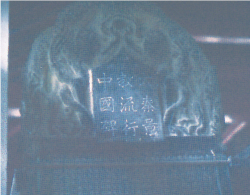
The upper portion of the Nestorian Stone, erected around the 8th century AD and discovered about ad 1625 in Shensi, China. The stone reads, “A monument commemorating the propogation of the Ta-Chin luminous religion (Christianity) in the Middle Kingdom.” The day of the stone’s erection was called ta vao shen wan ji, meaning “the great first of the Sabbath day.” The use of the Jewish terms for the days of the week in the heart of China indicates the powerful influence of Nestorian Christians in Asia.
Church of the East, Kurdistan: “The Nestorians eat no pork and keep the Sabbath. They believe in neither auricular confession or purgatory.” Schaff-Herzog. See above reference.
Scotland: “They held that Saturday was properly the Sabbath on which they abstained from work.“ Celtic Scotland, vol. 2, p. 350.
Wales: “There is much evidence that the Sabbath prevailed in Wales universally until ad 1115, when the first Roman bishop was seated at St. David’s. The Old Welsh Sabbath-keeping churches did not even then altogether bow the knee to Rome, but fled to their hiding places.” Lewis, Seventh Day Baptists in Europe and America, vol. 1, p. 29.
Waldenses of France: “The inquisitors…[declared] that the sign of a Vaudois, deemed worthy of death, was that he followed Christ and sought to obey the commandments of God.” H. C. Lea, History of the Inquisition of the Middle Ages, vol. 1.
Rev. 12:17; 14:12: “And the dragon was wroth with the woman, and went to make war with the remnant of her seed, which keep the commandments of God, and have the testimony of Jesus Christ.”
“Here is the patience of the saints: here are they that keep the commandments of God, and the faith of Jesus.”
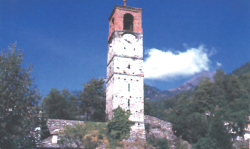
Waldensian tower at Bobbio
Africa: Before Prince Henry the Navigator brought the first Roman Catholic priests and missionaries to Ghana in the 15th century, the Akan-speaking people of Ghana assigned the seventh day of the week to God. God is known as Onyame Kwame—“God whose day is Saturday.” Owusu-Mensa, K., Onyame Kwaame: The Akan God of Saturday, Accra Ghana: Advent Press, 1990.
Norway: “We are informed that some people in different districts of the kingdom, have adopted and observed Saturday keeping. It is severely forbidden—in the holy church canon—one and all to observe days excepting those which the holy Pope, archbishop, or the bishops command. Saturday keeping must under no circumstances be permitted hereafter further than the church canon commands. Therefore, we counsel all the friends of God throughout all Norway who want to be obedient towards the holy church to let this evil of Saturday keeping alone; and the rest we forbid under penalty of severe church punishment to keep Saturday holy.” Catholic Provincial Council at Bergen, 1435, Dip. Norveg., 7, p. 397.
Dan. 7:25: “And he shall speak great words against the most High, and shall wear out the saints of the most High, and think to change times and laws.”
Holland and Germany: “Barbara of Thiers, who was executed in 1529, declared: ‘God has commanded us to rest on the seventh day.’ ” From the Dutch of T. J. Van Bright, A martyrology of the churches of Christ, commonly called Baptists, during the era of the Reformation, London, 1850, 1, pp. 113, 114.
Russia: “The accused [Sabbath keepers] were summoned; they openly acknowledged the new faith, and defended the same. The most eminent of them, the secretary of state, Kuritzyn, Ivan Maximo, Kassian, archimandrite of the Fury Monastery of Novgorod, were condemned to death, and burned publicly in cages, at Moscow, Dec. 17, 1503.” H. Sternberg, Geschichte der Juden, Leipzig, 1873, pp. 117–122.
India: “The famous Jesuit, Francis Xavier, called for the Inquisition, which was set up in Goa, India, in 1560, to check the ‘Jewish wickedness’ (Sabbath keeping).” Adeney, The Greek and Eastern Churches, pp. 527, 528.
Abyssinia: “It is not therefore, in imitation of the Jews, but in obedience to Christ and His holy apostles, that we observe that day.” Abyssinian legate at court of Lisbon, 1534, Geddes’ Church History of Ethiopia, pp. 87, 88.
Europe: About the year 1520, many Sabbath keepers found shelter on the estate of Lord Leonhardt of Liechtenstein, “as princes of Liechtenstein held to the observance of the true Sabbath.” J. N. Andrews, History of the Sabbath, p. 649.
England: “Here in England are about nine or ten churches that keep the Sabbath, besides many scattered disciples, who have been eminently preserved.” Stennet’s Letters, 1668 and 1670, Cox. Sab., 1, p. 268.
America: “Stephen Mumford, the first Sabbath keeper in America came from London in 1644.” Jas. Bailey, History of the Seventh-day Baptist General Conference, pp. 237, 238.

Newport, Rhode Island, site of the first Sabbath-keeping church in America, founded in 1664 by Stephen Mumford.
Transylvania: The edict of tolerance issued by Joseph II did not apply to the Sabbatarians, some of whom again lost all their possessions.
“The condition of the Sabbatarians [1635 to 1867] was dreadful. Their books and writings had to be delivered to the Karlsburg Consistory to become the spoil of flames.” Adolf Dux, Aus Ungarn, Leipzig, 1880, pp. 289–291.
America: Before Zinzendorf and the Moravians at Bethlehem began the observance of the Sabbath and prospered, there was a small body of German Sabbath keepers in Pennsylvania. Rupp’s History of Religious Denominations in the United States, pp. 109–123.
China: “The Taipings, when asked why they observed the seventh-day Sabbath, replied that it was, first, because the Bible taught it, and second, because their ancestors observed it as a day of worship.” Abraham Herbert Lewis, A Critical History of the Sabbath and the Sunday in the Christian Church.
Sweden: “We will now endeavor to show that the sanctification of the Sabbath has its foundation and its origin in a law which God at creation itself established for the whole world, and as a consequence thereof is binding on all men in all ages.” Evangelisten [organ of the Swedish Baptist Church], May 30–Aug. 15, 1863.
America: The Seventh-day Adventist movement began around 1844. With an international membership of 13.6 million, they are the largest Sabbath keeping Christian group.
The prophecy of Isa. 58:12–14 describes a group which revives the truth about God’s seventh-day Sabbath:
“And they that shall be of thee shall build the old waste places: thou shalt raise up the foundations of many generations; and thou shalt be called, The repairer of the breach, The restorer of paths to dwell in.
“If thou turn away thy foot from the Sabbath, from doing thy pleasure on my holy day; and call the Sabbath a delight, the holy of the Lord, honourable; and shalt honour him, not doing thine own ways, nor finding thine own pleasure, nor speaking thine own words:
“Then shalt thou delight thyself in the Lord; and I will cause thee to ride upon the high places of the earth, and feed thee with the heritage of Jacob thy father.”
Excerpted largely from The Sabbath of God Through the Centuries, by J. F. Coltheart, online ed., www.lltproductions.org, “Sabbath History.”