By Adapted By Michelle Patterson
“You must be mad, Private Hasel!” Lieutenant Gutschalk bellowed—his face beet red. “This is the German army! We’re going to war, and you want Saturday off?” Under his breath he spat out, “It’s just my luck to be saddled with a religious nut!”
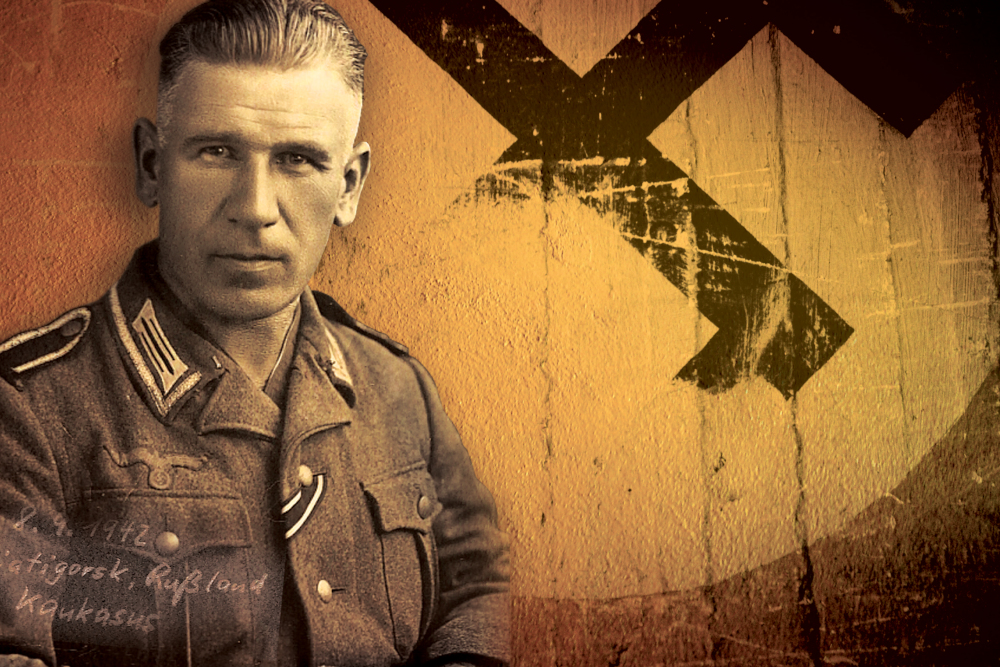
Franz Hasel was a Seventh-day Adventist Christian who loved his country but had no desire to fight in Hitler’s army. However, he had been drafted. His request to serve as a noncombatant had been refused. He knew he’d face many challenges if he remained faithful to God in the army; this was only the first.
Franz replied mildly to the lieutenant, “I just want permission to trade work with other soldiers so that my free days fall on Saturdays.”
Gasping for air, the lieutenant roared, “Get out of my sight!”
As Franz began to leave, Gutschalk yelled after him. “Work out whatever you want, but let me tell you this, Hasel. Once the advance starts, the war is not going to come to a standstill just so you can keep your Sabbath! If I see you shirking your duty in any way, you will live to regret it!”
Franz remembered the special prayer he’d had with his wife and children before he’d left for boot camp. They had prayed that God would protect them, reunite them and, most of all, help them stand true to His commandments during the trying times ahead. He strengthened his resolve to remain obedient to God. Franz’s fellow soldiers were more than willing to trade Sunday duty for Saturday duty. He knew, however, that these arrangements would only last until the end of boot camp.
Franz’s wife Helene also faced persecution in his absence. German children went to school six days a week. Traditionally, Seventh-day Adventists had been exempted, but now things were different. Keeping your children home on Saturdays was dangerous. Helene asked God for strength.
“Frau Hasel,” the principal said bluntly, “your children are not attending school on Saturday. Are you Jews?”
“No,” Helene replied, “we are Seventh-day Adventists. According to the Bible, Saturday is the day in which we are to worship God. My children have always been excused from Saturday attendance. I would like your permission to keep them home.”
“I cannot help you,” the principal answered. “I admire your principles, but I have been accused of harboring Jews in my school. I must insist that your children come on Saturdays, and must check to see that they do.”
Helene had another special prayer with her children.
When bombing began, Helene and the children moved in with an Adventist friend in Germany’s Black Forest, where it was safer. She enrolled her children in the local school and presented her request to the schoolmaster.
“Frau Hasel,” the schoolmaster said firmly, “I respect your religious preferences but I cannot allow it. It would jeopardize my position. Besides, if your children don’t attend school on Saturdays, the others will all want to stay home!”
In the end, the schoolmaster promised to think about it. Surprisingly, Helene received no further trouble when her children were absent every Saturday. A friend revealed why.
“This afternoon I heard a group of children talking. They were telling each other that the schoolmaster said the strangers from the big city were so smart they did not need to attend school on Saturday.”
Everyone laughed, praising God for His goodness.
Meanwhile, Franz and his battalion were moved into France and then Poland as part of Hitler’s invasion. Franz prayed again for God’s help to remain true to his convictions now that he was no longer in training.
He secretly discarded his pistol and put a wooden replica in his holster. Such an action, if discovered, would mean execution. It was his way of showing God that he was serious about not killing another person. God would be his only protection in battle.
Franz’s battalion invaded Russia. He realized that Friday evening was approaching. “You know I treasure Your Sabbath,” he prayed. “Up until now it’s been easy to trade work, but now we’re at the front, and the rules have changed. Please help.”
“The troops are exhausted,” the captain announced that first Friday. “We will have a rest day tomorrow.”
The next Friday, heavy downpours bogged the army down in mud, immobilizing the unit for a few days.
Another Friday, a sergeant approached Franz. “Hasel, I want you to write the ten-day report tomorrow.” Franz had been promoted to clerk and bookkeeper for the unit.
“Yes, but the paper is wet. If I put it in the typewriter, it will tear.” Franz replied.
“All right. Do the report Sunday.”
Another Friday came. “Hasel, you need to do the end-of-the-month close-out for the records tomorrow.”
“Yes, but there’s a lot of business in the store on Saturday night. Since Sunday is the first of the month, Saturday night’s sales should be included in the figures.”
“You’re right, better wait until Sunday.”
Every Sabbath God either stopped the entire army or gave Franz a way to convince his superiors that a task would be better done on Sunday rather than Saturday. Even his fellow soldiers realized they could get no work out of Franz on Saturdays.Franz’s faithful Sabbath keeping gave him opportunities to witness to the other soldiers, and even to share Bible prophecy with his captain.
The Lieutenant turned beet red. “This time, you will get what you deserve. Nobody will save you.”
But one Saturday things were different. The battalion was surrounded by Russians, and Lieutenant Gutschalk ordered Franz to defend the position on the south.
Here it comes, thought Franz. “Lieutenant, today is my Sabbath. I cannot participate. I am sorry.”
“What!” the lieutenant screamed. “Hasel, are you refusing an order?”
“Yes,” Franz responded, standing at attention.
Gutschalk turned beet red. “I have had enough of you!” He roared. “This time, you will get what you deserve. Nobody will save you.”
After the Russians had been pushed back, the lieutenant made a note in Franz’s service record that he was to be executed after the war for refusing an order.
Helene and the children were forced by edict to return to their city home in Frankfurt. Once again Helene faced the wrath of the party officials for her refusal to send the children to school on Sabbath. As they knelt for prayer one Sabbath morning, an air raid siren blared. The children quickly realized what this meant—school was cancelled during air raids! From then until the end of the war, in addition to the nightly air raids over Frankfurt, one happened every Saturday morning.
During the entire war, Franz only missed one Sabbath. During the hasty retreat, he lost track of time. God had protected him through it all. In fact, out of the original 1,200 men in Franz’s company, the man with the wooden gun was one of only seven to survive and one of only three uninjured.
Franz was turned over to the Americans when Germany surrendered. As they were being processed for release, the American officer asked Franz about the court-martial in his service record.
“I wouldn’t break the Sabbath. I am a Seventh-day Adventist, and I refused to work on Saturday,” Franz answered.
The American’s eyes got wide as he confessed that he was a Jew who had been unfaithful in Sabbath keeping in the U.S. army. He enabled Franz to be released quickly, to return home.
God continued to provide for the faithful Hasels after they were reunited at the war’s end. Through the hard times that continued, He never failed them. And neither will He fail any of us who determine to be faithful to Him and His commandments.v
Adapted from the book A Thousand Shall Fall, by Susi Hasel Mundy, Franz Hasel’s youngest child. Read the book for the entire thrilling story of the Hasel Family. Call 1-800-774-3566 to order a copy.