By Dane Griffin
You’ve probably heard it many times before. It’s a standard reply when someone is asked why he or she doesn’t worship on the Bible Sabbath—Saturday.
“Saturday? Why, that’s the Jewish Sabbath! God gave it to the Jews on Mount Sinai along with the Ten Commandments. But we worship on Sunday, the Lord’s day.” Then the subject is changed with not another thought about the accuracy of the answer.
Many Christians today honestly believe that Saturday is just a Jewish Sabbath, first mentioned in Exodus 20:8–11 when God gave Israel His law from Sinai. But a careful study of Genesis and the first chapters of Exodus reveal a different story. Let us examine the facts from three different stories before Sinai.
“Where no law is, there is no transgression.” Rom. 4:15. If no law existed before Sinai, if there had been no “Thou shalt not kill,” how could God hold Cain accountable for his brother’s murder?
But you might say, “Well, the other nine commandments were there, but the Sabbath was added at Sinai.” Really? Consider Genesis 4:3, 4: “And in process of time, it came to pass that Cain brought of the fruit of the ground an offering unto the Lord. And Abel...of the firstlings of his flock.”
Why were Cain and Abel bringing these offerings? Looking at the verse in the original Hebrew shows us why. The marginal reference for “And in the process of time” reads “At the end of the days,” which is the correct Hebrew rendering. Naturally, the question arises, “At the end of whatdays?”
The only grouping of days mentioned before this is the seven-day cycle of the Creation week: “And on the seventh day God ended His work…and He rested on the seventh day from all His work which He had made.” Gen. 2:2. Without the Sabbath, there would be no division point in the weekly cycle, no “end of the days.” We count the days until the seventh, “the end of the days,” and then begin counting again.
When Cain and Abel came with their offerings of worship “at the end of the days,” they didn’t just happen to be there at the same time. They had come because God had commanded worship on that day.
Sabbath before Sinai? Cain and Abel knew about it.
At the burning bush God called Moses back into active duty. Once in Egypt, Moses and his brother Aaron stood before Pharaoh’s throne. The time had come for Israel to be delivered.
During their 400-plus years in Egypt, the Jewish people had nearly forgotten God. Moses knew he must reacquaint them with His ways, so he told Pharaoh, “Thus saith the Lord,...Let My people go that they may hold a feast unto Me in the wilderness.... Let us go...and sacrifice unto the Lord our God.” Ex. 5:1, 3.
Before Sinai, Pharaoh accused Moses of wanting to make the Israelite slaves a nation of “sabbatizers.” One day off a week for worship? Never!
Pharaoh responded harshly, “Ye make them rest from their burdens.” Ex. 5:5. While this is a correct translation, the literal translation is, “Ye cause them to sabbatize.”
The fact that Moses, the author of Exodus, chose this particular word for rest is very significant. And it becomes even more significant when we see where Moses used the very same word in other passages. Notice Exodus 23:12. In speaking of the Sabbath after Sinai, Moses said, “Six days thou shalt do thy work, and on the seventh day thou shalt rest [sabbatize]: that thine ox and thine ass may rest [different word altogether!].” An entirely different word for rest is used for animals who were to rest from their labors but who could not sabbatize!
Now, look at Genesis 2:2, 3: “And on the seventh day God ended His work which He had made; and He rested [sabbatized] on the seventh day from all His work which He had made. And God blessed the seventh day and sanctified it: because that in it He had rested [sabbatized] from all His work which God created and made.”
Why would Moses use the same word for rest in Exodus 5:5 and 23:12 that he used in Genesis 2:2, 3 unless the event being described was the same event? Logic defies any other conclusion! The same author. The same word. The same event! Before Sinai, Moses understood that the Sabbath given at Creation was still to be observed by his people.
Shortly before God spoke His law to Israel at Sinai, He gave them an interesting test of loyalty. In response to the people’s complaints of hunger, God answered: “Behold, I will rain bread from heaven for you; and the people shall go out and gather a certain rate every day, that I may prove them, whether they will walk in My law or no.” Ex. 16:4. Every day God would rain down manna from heaven. The people were to gather only what they could eat that day, for it would spoil by the second day. But on the sixth day, God would rain down a double portion! Everyone was to gather double on that day, Friday, for “tomorrow [Saturday] is the rest of the holy Sabbath unto the Lord.” Ex. 16:23. “Six days ye shall gather it; but on the seventh day, which is the Sabbath, in it there shall be none.” Ex. 16:26.
Here, before Sinai, God reminds the people to rest on the seventh-day Sabbath. It is such a specific, clear command that none can argue with it! Israel knew about the Sabbath. This is made even more clear in the next verse: “And it came to pass that there went out some of the people on the seventh day for to gather, and they found none.” Ex. 16:27. Notice God’s response to this particular case of disobedience: “How long refuse ye to keep My commandments and My laws?... the Lord hath given you the Sabbath, therefore He giveth you on the sixth day the bread of two days.” Ex. 16:28, 29.
Now, the Bible clearly states that “where no law is, there is no transgression.” Rom. 4:15. How could God condemn them for not keeping the Sabbath holy if the Ten Commandments hadn’t yet been proclaimed from Sinai? The answer? They already had a knowledge of the Sabbath and the moral law—long before Sinai. Additionally, every week God had worked a special miracle upon the sixth day to remind them of the significance of His special day of worship and rest. Yet these rebels chose to disregard this, thereby showing their disloyalty and ingratitude to God.
Is the seventh-day Sabbath merely a Jewish tradition, a Jewish holy day? The stories we have seen deny it, and the very language of the fourth commandment denies it, too.
The Creator of the Sabbath, Jesus Himself, says, “The Sabbath was made for man, and not man for the Sabbath: therefore the Son of Man is Lord also of the Sabbath.” Mark 2:27, 28. That’s why God rested after creating the world—not for the Jews alone, but for all mankind.
Was there a creation before Sinai? Absolutely. Was there a seventh-day Sabbath before Sinai? Without a doubt. And that’s why Jesus could say with surety, “It is easier for heaven and earth [all creation, including Mt. Sinai] to pass, than one tittle of the law [including the fourth commandment] to fail.” Luke 16:17.
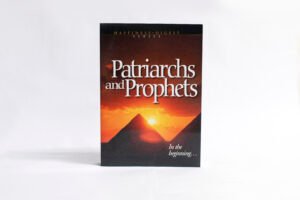
For further study, see the following resources: Patriarchs and Prophets and Bible Readings for the Home.

The late Dane Griffin was an international speaker, conducting seminars on the sanctuary, Bible prophecy, health, and other timely topics.