Far from being an abstract spiritual story, the Bible provides the names of myriads of characters (not only the heroes of the stories, but also minor players), places, weights, years and time spans, plants and animals, customs, and traditions. Take for example how the Gospel of Luke (3:1, 2) prefaces the story about John the Baptist by mentioning not less than seven contemporary rulers.
Nonetheless, Bible scholars and historians have called into question much of what the Bible says. Often, they quote the lack of archaeological evidence, the argument from silence, to cast doubt on the Scriptures. Archaeologist Michael Hasel explains: “Although more than 200 years have passed since this discipline [biblical archaeology] was established in the Near East, we have barely scratched the surface. Only a fraction of biblical sites are known. Of those that are, only a fraction have been excavated. Most of those excavated have only had 5 percent of the site uncovered; fewer yet are fully published.”1
Moreover, countless cuneiform tablets lie in museum storage rooms, waiting to be deciphered.
Yet, over the years, a steady stream of archaeological discoveries and insights from historical studies have pointed in the direction of the Bible’s trustworthiness, even in the small details. Following is just a sampling of some more recent findings.
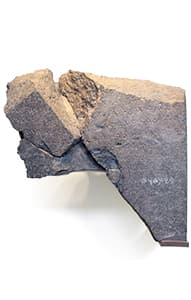
In July 1993, Tel Dan (Northern Israel) was the site of what proved to be a momentous discovery: a victory inscription by the Aramean King Ben-Hadad, boasting the defeat of the “house of David” and the “house of Israel.” On the basis of the writing, the inscription was dated to 850 BC.2 This was the first time the name “David” was found inscribed in the archaeological record. The Bible repeatedly uses the expression “the house of David” as the dynastic name for the kingdom of Judah. 1 Kings 12:26; 14:8. Joram, the son of Ahab (2 Kings 8:16), is also mentioned in the inscription.3
In the course of excavations in Jerusalem, archeologists found a seal impression bearing the name of “Baruch, the son of Neriah, the scribe.” The Bible identifies Baruch as the scribe who aided the prophet Jeremiah in committing his book to writing. Jer. 32:12.
Until recently, scholars have assumed that the Philistines were native to Canaan. But excavations at biblical Philistine sites, such as Ashkelon, Ashdod, Ekron, and Quasile, have unearthed pottery and architecture with Aegean (Greek) influences. The Bible had long identified the Aegean origins of the ethnic Philistines, specifically from Capthor or Crete (Gen. 10:14; Jer. 47:4; Amos 9:7).4 Additionally, DNA tests performed on human remains found in Ashkelon demonstrate that the Philistines originated from Southern Europe.5
In 2007, a researcher in the British Museum identified the name of Nebu-sarsekim, a Babylonian official, on a financial record dating to about 595 BC, the tenth year of the reign of the Babylonian king Nebuchadnezzar. Jer. 39:3 mentions Nebusarsekim in the context of Nebuchadnezzar’s second campaign against Jerusalem in 597 BC, when the king ordered this official to take care of Jeremiah, who was left behind in Jerusalem.6
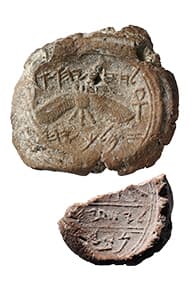
In February 2018, archaeologists in Israel working on a site close to the Temple Mount found a clay seal they believe may identify the biblical prophet Isaiah. The imprint of the seal reads “Yesha’yah NVY,” meaning “Isaiah”, and NVY being the first three letters of the Hebrew name for “prophet.” The same site has yielded in 2015 the seal of the Judean King Hezekiah, reading “Belonging to Hezekiah [son of] Ahaz king of Judah,”7 adding credibility to the 2018 discovery, as the two biblical characters were contemporary.8
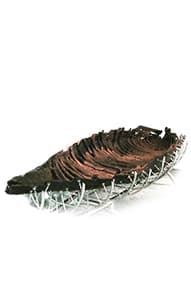
In the 1980s, due to drought, a first-century fishing boat surfaced from the mud of the Sea of Galilee. The boat could accommodate 15 people, and the back of the boat had a raised section that could be used for sleeping. The story of Jesus stilling the storm (Luke 8:23-25) describes Him sleeping in a boat and being woken up by His panicked disciples. The fishing boat find substantiates details in the story.9
Critics have dismissed the Gospel account of a Roman officer being present in a seemingly insignificant Galilean town, such as Capernaum. But recent excavations at Capernaum have uncovered a number of Roman-style buildings, including a bathhouse.10 Also, the discovery of stretches of important roads near Capernaum has muted the objection that there could not have been a centurion there because the village was not well connected by roads.11
In 2010 and 2017 respectively, two seal impressions (bullas) came to light at a dig in the City of David in Jerusalem. The names they bear belong to two ministers of King Zedekiah, who are mentioned in Jer. 38:1.12
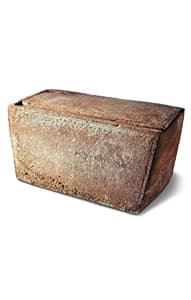
James, the brother of Jesus, who was martyred in ad 62, is a prominent figure in the book of Acts. In 2002, a mid-first-century ossuary (bone box) was discovered bearing the inscription “James, son of Joseph, brother of Jesus (Ya-akov bar Yosef akhui di Yeshua).” New Testament scholar Ben Witherington stated, “If, as seems probable, the ossuary found in the vicinity of Jerusalem and dated to about ad 63 is indeed the burial box of James, the brother of Jesus, this inscription is the most important extra-biblical evidence of its kind.”13
M. G. Hasel, “Archaeology and the Authority of the Bible,” Ministry, March 2012.
A. Biran & J. Naveh, “An Aramaic Stele Fragment from Tel Dan,” Israel Exploration Journal, No. 43, 1993, pp. 81–98.
O. Muncaster, 101 Reasons You Can Believe: Why the Christian Faith Makes Sense (Eugene, OR: Harvest House, 2004), pp. 72, 73.
M. G. Hasel, “Postmodern Bible Critics and Recent Archaeology,” Adventists Affirm, Vol. 20(3).
Rinat Harash & Ari Rabinovitch, “Biblical bad guys the ancient Philistines came from Europe, DNA shows,” Reuters, reuters.com, July 3, 2019.
Hasel, “Archaeology and the Authority of the Bible”
“Impression of King Hezekiah’s Royal Seal Discovered in Ophel Excavations South of Temple Mount in Jerusalem,” The Hebrew University of Jerusalem, new.huji.ac.il, Feb 12, 2015.
“Impression of biblical king’s seal found in Jerusalem,” BBC News, Dec 2, 2015.
R. O. Muncaster, 101 Reasons You Can Believe: Why the Christian Faith Makes Sense (Eugene, OR: Harvest House, 2004), pp. 72, 73.
I. Wilson, The Bible is History (London: Weidenfeld & Nicolson, 1999), p. 218.
J. H. Charlesworth, “The Historical Jesus in the Fourth Gospel: A Paradigm Shift?” Journal for the Study of the Historical Jesus, No. 8, 2010, p. 32.
“Bullae,” City of David, www.cityofdavid.org.il.
Ben Witherington, quoted by Chad V. Meister, Building Belief: Constructing Faith from the Ground Up (Eugene, OR: Wipf & Stock, 2009), p. 146.