

By Antonella Pedley
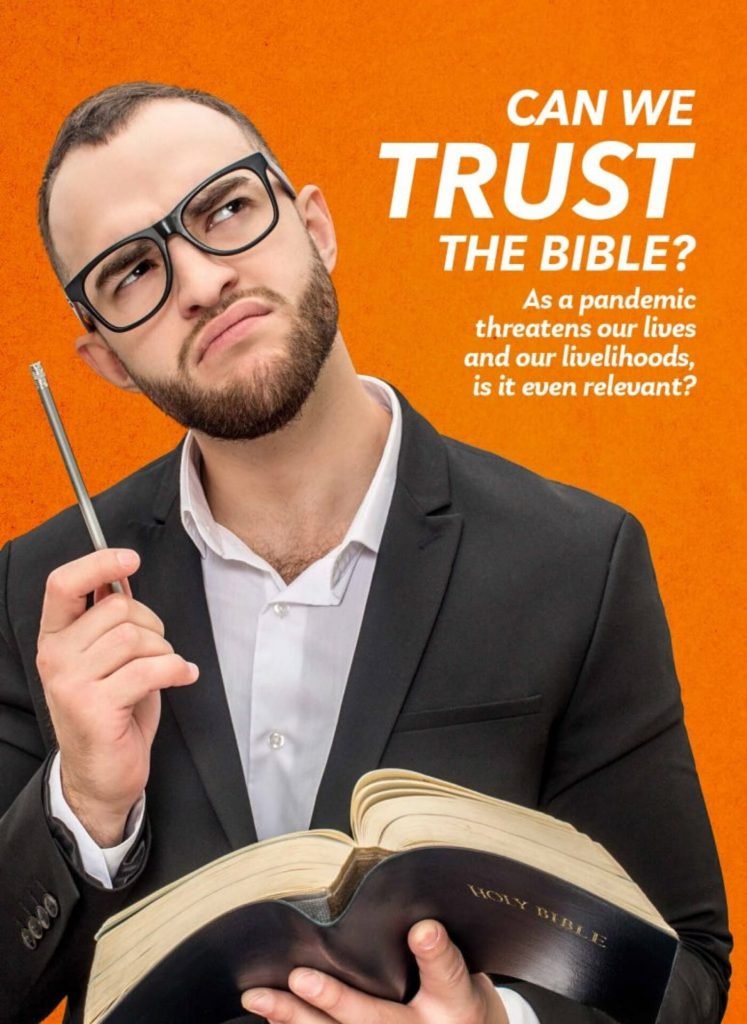
As I write these lines, it’s hard to ignore that the COVID-19 pandemic continues to claim thousands of vulnerable victims worldwide. Bare grocery shelves, companies laying off staff or folding up completely—is there anything left to hang on to in these times of uncertainty? Is there something that has withstood calamities far greater than this?
There is an ancient book that has shown just such extraordinary resilience.
During the iron grip of communist atheism in Romania, Bibles were extremely hard to find. In the early 1980s, the World Reform Alliance donated 20,000 Bibles to the Reformed Church in Romania. Tragically, on the orders of the country’s communist dictator, Nicolae Ceaușescu, the Bibles were turned into toilet paper. Believers were horrified to find Bible verses on purchased toilet rolls. “We don’t need Bibles anymore,” declared Ceaușescu in 1984 to George Shultz, the visiting American secretary of state. Five years later, Ceaușescu and his infamous wife were executed by a firing squad of the new revolutionary government. No other Eastern Bloc dictator suffered so grim a fate. Since then, Bibles have been freely available and are blessing the lives of countless Romanians.
“Heaven and earth shall pass away, but My words shall not pass away,” declared Jesus in Matthew 24:35. Many have tried to annihilate God’s book. Pagan Roman emperors ordered its destruction. The medieval Church burned any Bible found in the hands of lay people. Philosophers have hammered the Bible with passionate critique and embittered arguments. Humanists and postmodern thinkers have tried to chip away at its reputation, but to no avail. Indeed, no other book has been so meticulously investigated and scrutinized by critical scholars.
And yet, the Bible is still alive and well. It is history’s absolute best-seller, by far the most translated book ever, and read by people every day—all over the globe. “The grass withers, the flower fades, but the word of our God stands forever.” Isa. 40:8.
Why has the Bible endured? Christian thinker Ravi Zacharias writes that any worldview has to pass three tests for truth: logical consistency, empirical adequacy, and experiential relevance.1 In other words, does the worldview represented by the Bible make sense when taken together? Does it stand up to external facts and evidence, such as science and archaeology? And finally, is it relevant to our lives today?
I think the answer is a three-fold yes! Though diligent study is required to best understand it, the Bible forms a harmonious whole, one passage interpreting another. Scientific and historical studies have time and again confirmed the truth of biblical statements. The Bible has given guidance, direction, encouragement, and comfort to countless people, including myself.
But don’t take my word for it. Explore this special
issue and discover it for yourself. And more importantly, pick up the Bible and
read it. You'll never regret it!
Antonella Pedley is the principal contributor for this issue. She lives in Sweden and holds an MA in Ancient Religions from the University of Wales Trinity Saint David.